
Horn Management in Waikato Dairy Farming: Why It Matters
Horns are permanent pointed growths made of a bony core covered by a keratin sheath, similar to a fingernail. They grow from a coronary ring on the head of cattle and continue throughout the animal’s life. While horns serve natural purposes - such as social status, communication, defence, and even thermoregulation - in modern intensive farming systems, they create significant welfare and safety challenges.
In close-contact environments like milking yards or feed pads, horns can cause injuries to other cows, bruising during transport, and even harm to humans. Common issues include:
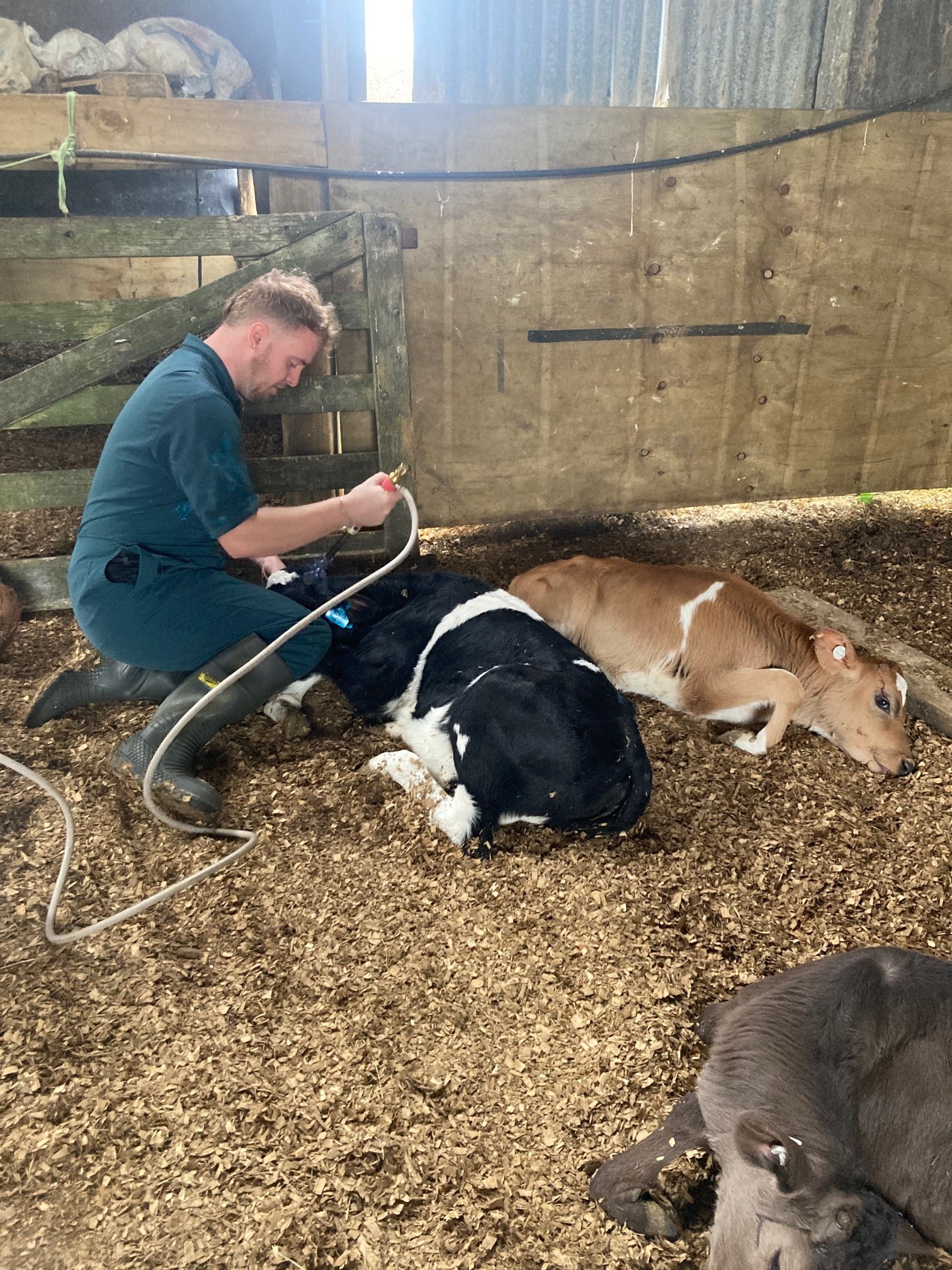
One of the most common procedures in spring is disbudding dairy replacement calves at 3 - 6 weeks old. Under Animal Welfare Regulations, this must be done with local anaesthetic before using a hot iron to cauterise the horn growth ring. Older animals with large or deformed horns may require dehorning, which is more complex and often involves sedation and local anaesthetic.
Horn growth is controlled by genetics. A dominant gene produces polled (hornless) cattle, while a double recessive gene results in horned animals. Many beef breeds like Angus and Hereford have been selected for polled genetics. Using these bulls over dairy cows can significantly reduce the need for disbudding.
The challenge: Invest in polled dairy genetics. Within a few years, your herd could be entirely polled, improving welfare and reducing risk for both animals and people.
